Philips 3200 Series Coffee Machine Manual: A Comprehensive Guide
This guide details operation, troubleshooting, and maintenance for Philips 3200 Series machines, offering PDF access and covering common issues.
The Philips 3200 Series represents a leap forward in automated espresso enjoyment, designed for coffee lovers seeking convenience without compromising quality. These fully automatic machines brew a variety of coffee beverages, from rich espressos to creamy lattes, all at the touch of a button.
This series distinguishes itself through the innovative LatteGo system, ensuring consistently perfect milk froth with minimal cleaning effort. Accessing the comprehensive manual – available in PDF format – is crucial for unlocking the full potential of your machine. The manual provides detailed instructions, troubleshooting guidance, and maintenance schedules, ensuring years of reliable performance. Understanding your Philips 3200 begins with familiarizing yourself with its features and capabilities, as outlined within this essential resource.
Understanding the Control Panel
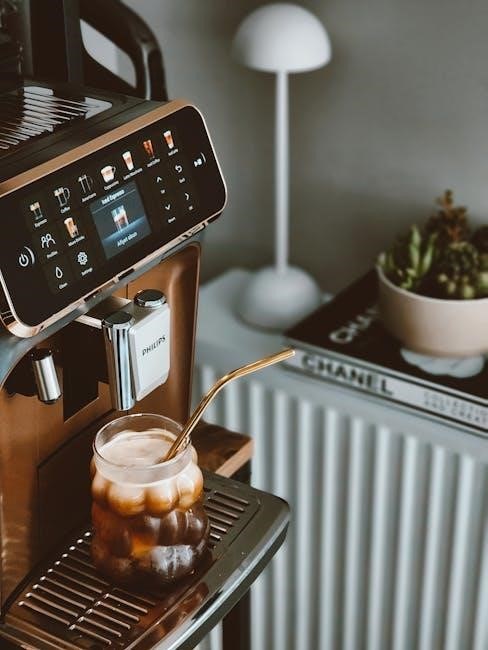
The Philips 3200 Series control panel is intuitively designed for ease of use. It typically features buttons for power, coffee selection (espresso, lungo, etc.), and adjustable settings like coffee strength and volume. The manual provides a detailed diagram identifying each button and its corresponding function.
Navigating the panel allows customization of your brewing experience. Icons indicate various options, and the display often shows machine status, error messages, and maintenance reminders. Referencing the PDF manual is essential for understanding specific functions, such as programming your preferred coffee length or activating the automatic cleaning cycle. Mastering the control panel unlocks the full potential of your Philips 3200 coffee machine.
Initial Setup and Preparation
Before your first brew with the Philips 3200 Series, proper setup is crucial. Begin by removing all packaging and rinsing the brewing group and drip tray. The manual emphasizes the importance of activating the water filter, if included, to ensure optimal water quality and coffee flavor.
Next, adjust the water hardness setting according to your local water supply – the manual provides instructions and a testing strip. Fill the water tank with fresh, filtered water. A thorough initial rinse cycle, as detailed in the PDF, removes any residual dust from the manufacturing process, preparing the machine for delicious coffee.
Installing the Water Filter
To install the water filter in your Philips 3200 Series machine, first locate the filter compartment, typically within the water tank. Rinse the filter under cold water for five minutes, as instructed in the manual, to remove any loose particles.
Insert the filter into the compartment, ensuring it clicks securely into place. The manual details the correct orientation. After installation, prime the machine by running several jugs of water through it to activate the filter fully. This process, outlined in the PDF, guarantees optimal water quality and enhances the flavor of your coffee. Regular filter replacement is recommended.
Adjusting Water Hardness Settings
Properly setting the water hardness level on your Philips 3200 Series machine is crucial for descaling and longevity. Consult your local water authority to determine your water’s hardness. Access the machine’s settings via the control panel, navigating to the water hardness option, as detailed in the manual.
Select the corresponding level – soft, medium, or hard – based on your water analysis. Incorrect settings can lead to insufficient descaling or unnecessary cycles. The PDF manual provides a chart correlating water hardness with the appropriate machine setting. Adjusting this ensures optimal performance and prevents scale buildup.
Brewing Your First Cup of Coffee
Before your first brew, rinse the machine by running several cycles with water only, following the manual’s instructions. Fill the water tank with fresh, filtered water. Ensure the brewing unit is correctly installed. Select your desired coffee type – whole beans or ground coffee – and fill the appropriate compartment;
The Philips 3200 Series allows customization of coffee strength and volume via the control panel. Refer to the PDF manual for detailed guidance on these settings. Initiate brewing, and enjoy your first cup! The initial cycles prime the system, ensuring optimal flavor and performance.
Selecting Coffee Strength and Volume
The Philips 3200 Series offers adjustable coffee strength, typically ranging from mild to extra strong, accessible through the machine’s control panel. Volume settings allow you to customize the amount of coffee brewed, from a short espresso to a larger cup. Consult the manual for specific button combinations to adjust these parameters.
Experiment with different settings to find your preferred taste. The PDF manual provides a detailed explanation of each strength level and volume option. Remember that bean type and grind size also influence the final brew, so adjust accordingly for optimal results.
Using Whole Beans vs. Ground Coffee
The Philips 3200 Series is designed to work with both whole beans and pre-ground coffee, offering flexibility based on preference and availability. Using whole beans generally provides a fresher, more flavorful cup due to the immediate grinding process. However, pre-ground coffee is convenient when time is limited.
The manual details how to switch between bean and ground coffee modes. When using ground coffee, ensure it’s a fine to medium grind for optimal extraction. The PDF guide clarifies the correct compartment for each type and provides guidance on adjusting settings for consistent results.
LatteGo Milk System: Operation and Cleaning
The LatteGo system, featured in the Philips 3200 Series, delivers perfectly frothed milk with minimal effort. The manual emphasizes its two-part design – no tubes, just wide-mouth parts for easy rinsing. Attaching and detaching are straightforward, as illustrated in the PDF guide.
Regular cleaning is crucial. The manual stresses daily rinsing after each use and weekly deep cleaning. Disassembly is simple, allowing thorough cleaning of all components. Proper maintenance prevents milk residue buildup, ensuring optimal performance and hygiene. Detailed cleaning instructions are available within the downloadable manual.
Attaching and Detaching the LatteGo System
The Philips 3200 Series manual provides clear instructions for attaching the LatteGo system. Align the LatteGo milk container with the machine’s milk outlet and gently push upwards until it clicks securely into place. Detaching is equally simple: press the release button located on the side of the milk system.
The manual highlights the importance of ensuring a firm connection to prevent leaks during milk frothing. It also cautions against forcing the system, as this could damage the components. A visual guide within the PDF demonstrates the correct procedure, ensuring a hassle-free experience.
Cleaning the LatteGo Milk Container
The Philips 3200 Series manual emphasizes the importance of regular LatteGo cleaning. After each use, disassemble the milk container into its two components. Rinse thoroughly with lukewarm water, avoiding abrasive cleaners or scouring pads. Both parts are dishwasher-safe (top rack only), offering convenient cleaning.
The manual details a more thorough cleaning process recommended weekly. This involves soaking the parts in warm water with a drop of dish soap, then scrubbing gently. Ensure all milk residue is removed to prevent clogging and maintain optimal performance. The PDF provides diagrams illustrating proper disassembly and cleaning steps.
Maintenance and Cleaning Procedures
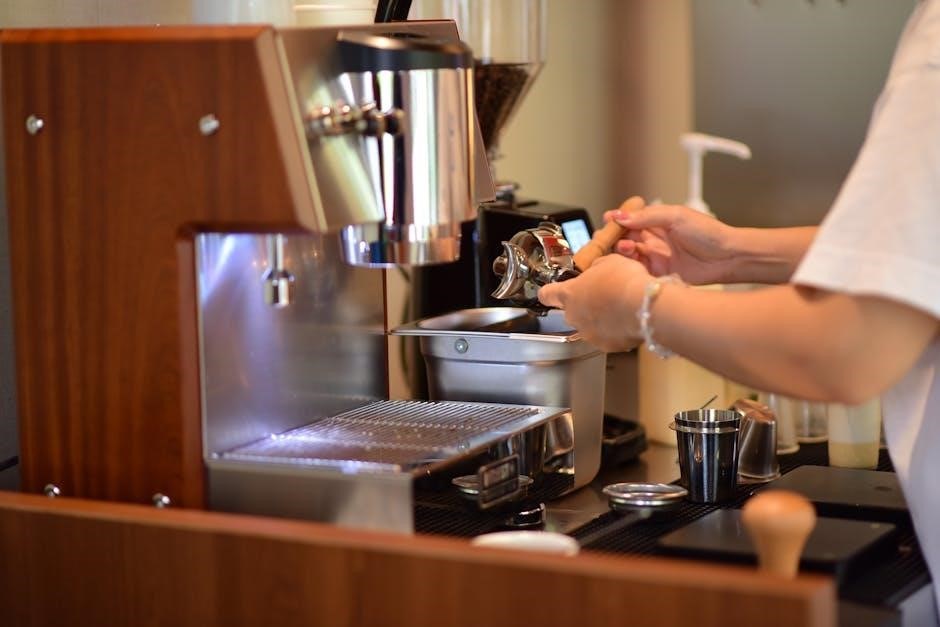
The Philips 3200 Series manual highlights regular maintenance for longevity. Key procedures include descaling, brewing unit cleaning, and LatteGo system upkeep. Descaling, crucial for removing mineral buildup, should occur when prompted by the machine, using a descaling solution. The manual provides detailed descaling instructions.
The brewing unit requires periodic cleaning, easily performed following the on-screen prompts. The PDF manual offers visual guides. Consistent cleaning prevents clogging and ensures optimal coffee quality. Additionally, the manual stresses the importance of rinsing the drip tray and waste container frequently to maintain hygiene.
Descaling the Coffee Machine
The Philips 3200 Series manual emphasizes descaling to remove limescale buildup, vital for machine performance. The machine will indicate when descaling is needed. Use only a descaling solution designed for coffee machines, following the manual’s precise instructions. Mix the solution with water in the water tank.
Initiate the descaling cycle through the machine’s menu. The manual details each step, including rinsing the tank thoroughly after the cycle completes. This process ensures optimal brewing temperature and prevents damage. Refer to the PDF for visual aids. Regular descaling, as outlined in the manual, prolongs the machine’s lifespan.
Cleaning the Brewing Unit
The Philips 3200 Series manual stresses regular brewing unit cleaning for optimal coffee quality. Remove the brewing unit as detailed in the manual and rinse it under running water. Pay close attention to removing any coffee grounds. The manual advises against using soap or detergents.
For a deeper clean, the manual suggests soaking the brewing unit in a solution of water and descaling solution. Re-install the brewing unit carefully, ensuring it clicks into place. The PDF manual provides diagrams. Consistent cleaning, as per the manual’s guidance, prevents blockages and ensures consistently flavorful coffee.
Troubleshooting Common Issues
The Philips 3200 Series manual dedicates a section to resolving frequent problems. Common issues, detailed in the PDF manual, include error messages and the machine failing to brew. The manual advises checking water levels, bean container fullness, and the drip tray.
Error messages have specific meanings explained within the manual; referencing the page number is recommended. If the machine won’t brew, the manual suggests descaling or cleaning the brewing unit. The manual also offers guidance on addressing milk system issues. Always consult the manual before contacting support.
Error Messages and Their Meanings
The Philips 3200 Series manual provides a comprehensive list of error messages displayed on the machine’s control panel. Each code indicates a specific issue, ranging from low water levels to brewing unit problems. The manual details the meaning of each message and suggests corresponding solutions.
For example, a flashing orange light might signal a blocked brewing unit, requiring cleaning. The PDF manual emphasizes the importance of referencing the error code directly to pinpoint the problem. Ignoring error messages can lead to further damage, so prompt attention, guided by the manual, is crucial.
Coffee Machine Not Brewing
If your Philips 3200 Series machine isn’t brewing, the manual suggests several checks. First, ensure the water reservoir is filled and correctly inserted. Next, verify the bean container (if using whole beans) isn’t empty and the grinding setting is appropriate. A blocked brewing unit is a common cause; the manual details how to remove and clean it thoroughly.
Also, check for error messages on the display, as these provide specific diagnostic information. The PDF manual advises descaling if the issue persists, as mineral buildup can impede water flow. Referencing the troubleshooting section is vital for resolving this issue.
Understanding the Automatic Cleaning Cycle
The Philips 3200 Series features an automatic cleaning cycle, crucial for maintaining optimal performance. This cycle, detailed in the manual, flushes water through the brewing unit to remove coffee oils and residue. The machine prompts when cleaning is needed, typically after a certain number of brews.
Following the manual’s instructions is vital; it involves placing a container under the coffee outlet and initiating the cycle via the control panel. Regular use of this function, alongside manual cleaning, extends the machine’s lifespan and ensures consistently flavorful coffee. The PDF manual provides a step-by-step guide.
Replacing Parts and Accessories
The Philips 3200 Series manual outlines procedures for replacing key components. Regularly replacing the brewing unit – typically every 5000-10000 cups, as per the manual – ensures optimal coffee quality. Water filters should be replaced every two months, or as indicated by the machine, to maintain water purity.
PDF documentation details how to order genuine Philips parts, like maintenance kits (CA6706/48), and provides instructions for safe and effective replacement. Incorrect parts or installation can affect performance; always consult the manual for compatibility and guidance.
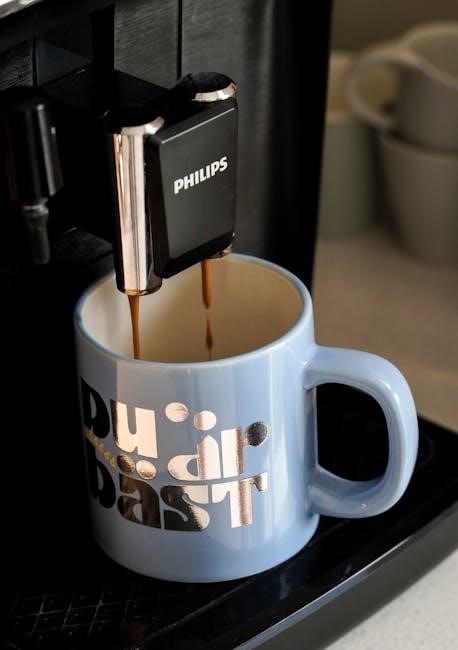
Brewing Unit Replacement
The Philips 3200 Series manual provides step-by-step instructions for brewing unit replacement. Typically, replacement is needed after 5,000 to 10,000 brewing cycles, ensuring consistent coffee quality. The manual emphasizes the importance of using genuine Philips brewing units for optimal performance and to avoid damage.
PDF guides illustrate the removal and installation process, highlighting key alignment points. Before installing the new unit, thoroughly clean the brewing unit housing. Incorrect installation can lead to leaks or brewing issues; refer to the manual’s diagrams for correct positioning.
Water Filter Replacement
The Philips 3200 Series manual recommends replacing the water filter every two months, or after 60 liters of water, to maintain optimal water quality and coffee taste. Using a Philips water filter reduces chlorine, removes impurities, and enhances beverage flavor. The manual details the filter replacement process, including soaking the new filter in water for five minutes before installation.
PDF guides illustrate the filter compartment location and removal steps. After replacing, the machine requires priming; the manual instructs to brew several cups to flush the system. Ignoring filter replacement can lead to scale buildup and affect machine performance.
Downloading the Philips 3200 Series Manual (PDF)
Accessing the Philips 3200 Series manual in PDF format is straightforward. The official Philips website provides downloadable versions for various models within the series, including the LatteGo 3200. These PDFs contain comprehensive information, from initial setup and daily use to troubleshooting and maintenance procedures.
Online databases also host user manuals, offering quick access without registration. Searching “Philips 3200 series manual PDF” yields numerous results. Ensure the PDF corresponds to your specific model number for accurate guidance. Having a digital copy allows convenient offline access for reference during operation or cleaning.
Safety Precautions and Warnings
Prioritize safety when operating your Philips 3200 Series coffee machine. Always unplug the appliance before cleaning or performing maintenance. Avoid immersing the machine base in water. Hot surfaces, like the brewing unit and steam wand, require caution to prevent burns.
Never operate the machine with a damaged cord or plug. Keep the appliance out of reach of children. Do not use the machine for purposes other than intended. Regularly inspect the water tank and hoses for leaks. Follow descaling instructions carefully, as improper descaling can damage the machine.
Warranty Information and Support
Philips offers a warranty on the 3200 Series coffee machine, covering defects in materials and workmanship. The warranty period varies by region; consult your purchase documentation for specifics. Proof of purchase is required for warranty claims. The warranty does not cover damage from misuse, accidents, or unauthorized repairs.
For support, visit the Philips website for FAQs, troubleshooting guides, and downloadable manuals. You can also contact Philips customer service via phone or online chat. Explore available parts and accessories, including maintenance kits, for optimal performance. Register your product online to receive updates and exclusive offers.